• Welcome to your new Gnomio site

    Now, you are in control!

    Moodle is an open-source Learning Management System (LMS) that provides educators with the tools and features to create and manage online courses. It allows educators to organize course materials, create quizzes and assignments, host discussion forums, and track student progress. Moodle is highly flexible and can be customized to meet the specific needs of different institutions and learning environments.

    Moodle supports both synchronous and asynchronous learning environments, enabling educators to host live webinars, video conferences, and chat sessions, as well as providing a variety of tools that support self-paced learning, including videos, interactive quizzes, and discussion forums. The platform also integrates with other tools and systems, such as Google Apps and plagiarism detection software, to provide a seamless learning experience.

    Moodle is widely used in educational institutions, including universities, K-12 schools, and corporate training programs. It is well-suited to online and blended learning environments and distance education programs. Additionally, Moodle's accessibility features make it a popular choice for learners with disabilities, ensuring that courses are inclusive and accessible to all learners.

    The Moodle community is an active group of users, developers, and educators who contribute to the platform's development and improvement. The community provides support, resources, and documentation for users, as well as a forum for sharing ideas and best practices. Moodle releases regular updates and improvements, ensuring that the platform remains up-to-date with the latest technologies and best practices.

    Links of interest:

    (You can edit or remove this text)

Available courses

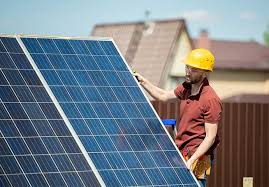
A solar installation is a renewable energy system that converts sunlight into electricity to power homes and businesses. It consists of solar panels that capture sunlight, an inverter that converts the energy into usable electricity, and optional batteries for energy storage. 
How a Solar Installation Works
  • Capture (Solar Panels): Photovoltaic (PV) cells absorb sunlight and generate Direct Current (DC) electricity.
  • Conversion (Inverter): The system's inverter transforms this DC electricity into Alternating Current (AC) electricity, which is standard for household appliances.
  • Storage & Usage: Excess energy is either routed to a battery system for nighttime use or fed directly back into the utility grid, depending on the system type. [1, 2, 3, , 5]
The Installation Process
A professional installation follows a structured approach to ensure safety and system longevity: [1]
  1. Site Assessment: Technicians evaluate roof conditions, shading, and your daily energy consumption.
  2. Mounting: Aluminum or galvanized steel racks are securely attached to the roof or ground, positioned to capture maximum sunlight.
  3. Wiring & Integration: Solar panels are wired together and connected to the inverter, safety disconnects, and your electrical panel.
  4. Commissioning: The system is powered on, tested, and connected to smart monitoring apps so you can track your energy production and savings in real-time. 
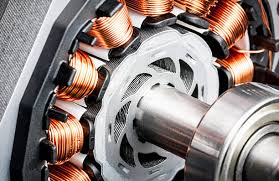
Electrical and machine installation refers to the safe setup, positioning, and wiring of electromechanical equipment (such as motors, transformers, and generators). It involves site preparation, mechanical anchoring, electrical wiring, earthing, and control system configuration to ensure efficient, compliant, and hazard-free operation.
Key Phases of Installation
1. Site Preparation & Foundation
  • Location & Environment: Selecting a space with proper ventilation, adequate spacing for cooling, and protection against dust, moisture, and extreme temperatures.
  • Civil Works: Designing and pouring a stable, vibration-damped concrete foundation or steel frame to minimize mechanical stress.
  • Mechanical Alignment: Ensuring the machine is perfectly leveled using spirit levels and securely fastened using heavy-duty bolts.
    Scribd +2
2. Electrical Wiring & Cable Laying
  • Cable Selection: Choosing power cables that match the machine's nominal voltage, current, and insulation rating.
  • Routing & Segregation: Laying cables through conduits, trays, or trenches, ensuring safe distances between power and control lines to prevent signal interference.
  • Termination: Safely connecting conductors to terminals using properly sized crimps, lugs, and glands to avoid loose or corrosion-prone joints.
3. Safety & Control Integration
  • Earthing/Grounding: Connecting the machine’s frame to an earth electrode pit to protect personnel from electric shocks and prevent electrical faults.
  • Protection Devices: Installing circuit breakers, isolators, and fuses to automatically de-energize the machine during faults.
  • Control Systems: Integrating automation hardware, such as Programmable Logic Controllers (PLCs), relays, and motor starters, to govern operational speeds and sequences.